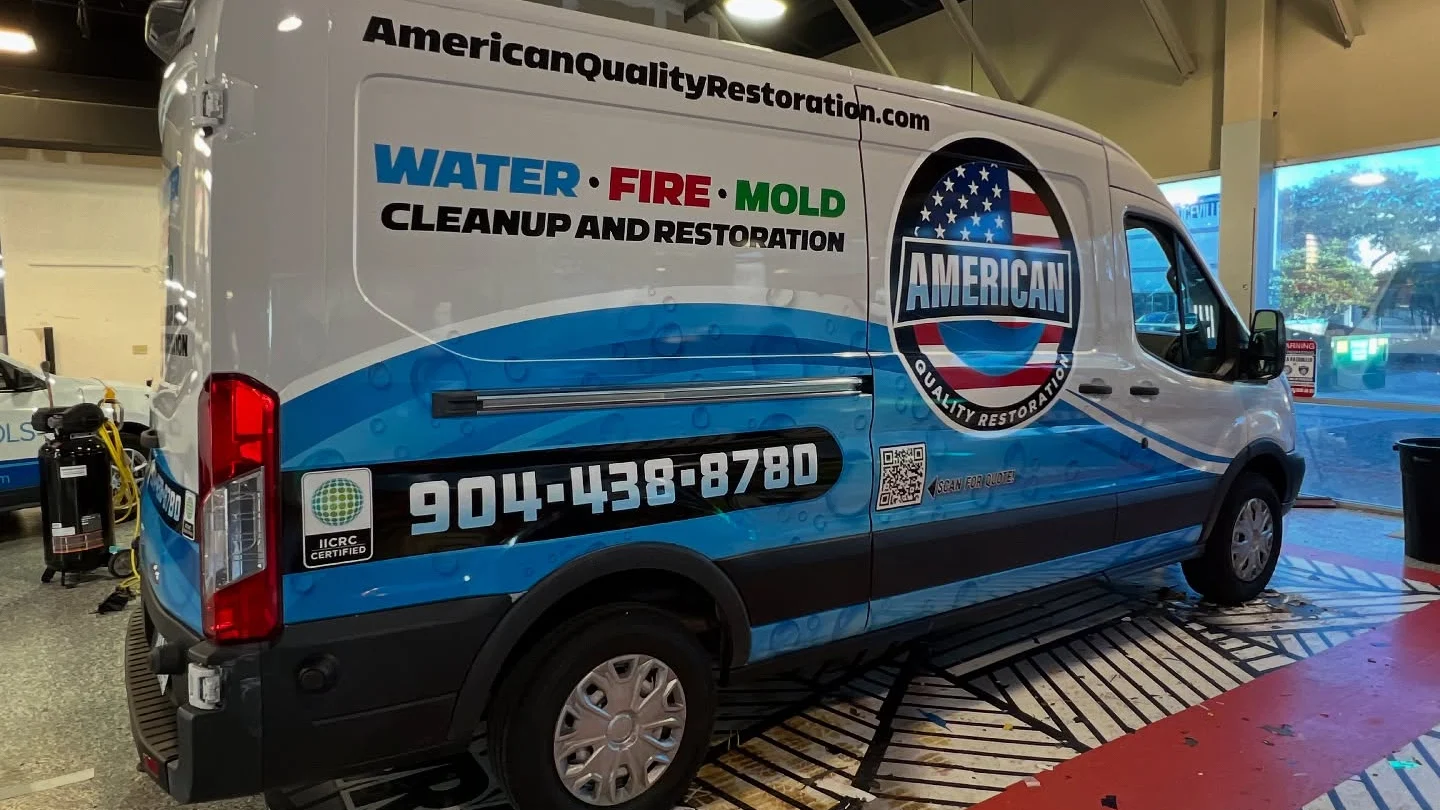
If you’ve just discovered standing water in your home, the first 24 hours matter more than almost any other stretch of the recovery. Shut off the water source if you can safely reach it, move valuables and electronics out of the affected area, and start removing standing water with towels, a wet/dry vacuum, or buckets. Photograph everything before you touch it. Then get air moving through the space with fans and open windows if the humidity outside is lower than inside. Florida’s warm, humid air means wet building materials can start growing mold within a day or two, so speed here isn’t optional, it’s the difference between a drying job and a demolition job.
What’s Actually Happening to Your House Right Now
Water doesn’t stay where you can see it. It wicks up drywall, travels along baseboards, and soaks into subfloor and insulation long before a stain appears on the ceiling below. In a typical Jacksonville home built on a concrete slab, water from a burst pipe or appliance failure often spreads laterally under flooring before anyone notices, because the slab itself doesn’t absorb it the way a crawlspace or basement structure might. If the water came from a clean source, like a supply line, you’re dealing with what the restoration industry calls Category 1 water: relatively low risk, but still capable of causing structural damage and mold growth if left untreated. If it came from a toilet overflow, a sewage backup, or floodwater, the risk level changes entirely and the cleanup needs to be treated as a biohazard situation, not a simple dry-out.
Your First 24 Hours, Step by Step
- Stop the source. If it’s a plumbing failure, shut off the main water valve. If it’s a water heater, turn off its supply line and the power or gas to the unit.
- Kill the power if there’s any risk of water meeting electrical outlets or panels. When in doubt, don’t enter the room until a professional confirms it’s safe.
- Document before you clean. Take photos and video of the water level, affected furniture, flooring, and any visible damage. Your insurance adjuster will want this.
- Remove standing water. A wet/dry shop vac handles small volumes. For anything beyond a few inches, or water covering more than one room, extraction equipment does the job faster and more thoroughly than anything you’ll find at a hardware store.
- Pull up what you can. Area rugs, cushions, and loose items sitting in water should be moved to a dry area immediately. Wet cardboard boxes fall apart fast and should be emptied, not carried.
- Increase airflow. Box fans, ceiling fans, and open doors between rooms (not to the humid outdoors if it’s a typical Jacksonville afternoon) help start the evaporation process.
- Call your insurance company to open a claim and ask what documentation they require before repairs begin.
What Not to Do
- Don’t run a dehumidifier in a sealed, unventilated room expecting it to fix everything; without proper air movement across wet materials, it won’t dry the structure evenly.
- Don’t use a household vacuum (non wet/dry) on standing water; you’ll damage the vacuum and potentially shock yourself.
- Don’t assume carpet padding can be saved. Padding holds water like a sponge and almost always needs to be removed and replaced, even when the carpet itself survives.
- Don’t close up the house and leave for the weekend assuming it’ll dry on its own. Enclosed, humid Florida air sitting on wet drywall is exactly the environment mold needs to establish itself, often within 24 to 48 hours.
- Don’t start demolition (cutting out drywall, pulling up flooring) before your insurance adjuster has seen the damage or at least approved documentation of it, unless a professional has advised it’s necessary to prevent further loss.
When to Call a Professional
A wet spot from a small, contained leak that you caught immediately might be something you can manage with fans and a dehumidifier over a weekend. But several situations call for a trained crew rather than a DIY approach:
- Water has been sitting for more than a few hours, or you’re not sure how long it’s been there.
- The water source was a toilet, sewer line, or anything other than a clean supply line.
- Water has reached electrical outlets, HVAC returns, or crawlspace insulation.
- You can see or smell signs of mold already, which can mean the moisture has been present longer than you realized.
- The affected area is larger than a single room, or water has traveled between floors.
- You’re working with an insurance claim and need documentation that meets carrier standards.
Our technicians hold IICRC certifications in water damage restoration and structural drying, and our water damage restoration team uses moisture meters and thermal imaging to find water that’s migrated beyond what’s visible, including under flooring and inside wall cavities. That matters because drying only what you can see often leaves hidden pockets of moisture that turn into a mold problem weeks later.
The Recovery Timeline After the First Day
Once the first 24 hours are behind you, the real drying process begins and it typically runs longer than people expect. Structural drying following IICRC S500 guidelines generally involves monitoring moisture content in walls, subfloor, and framing daily, with equipment running continuously until materials reach a dry standard, not just a dry appearance. Drywall can look fine on the surface while still holding significant moisture a few inches up from the baseboard. This phase can take several days depending on how much water intruded, what materials absorbed it, and how quickly extraction and air movement started.
If materials were too saturated to dry (carpet padding, some drywall, insulation) they’ll need to be removed and replaced as part of reconstruction rather than just dried in place. This is also the point where a mold inspection makes sense if there was any delay between the water event and cleanup, since early detection keeps a small problem from becoming a larger remediation project.
Water damage rarely announces itself as a single event. It’s a timeline, and what you do in the first 24 hours determines how much of that timeline you control. If you’re standing in a wet room right now trying to decide whether to call someone, that’s usually a sign the situation is bigger than a few towels and a fan. American Quality Restoration serves Jacksonville, Jacksonville Beach, Orange Park, Ponte Vedra Beach, Atlantic Beach, Neptune Beach, Fleming Island, and Fruit Cove, and a call to (904) 438-8780 gets you a straight answer about whether your situation needs professional extraction and drying or whether you’re handling it correctly on your own.