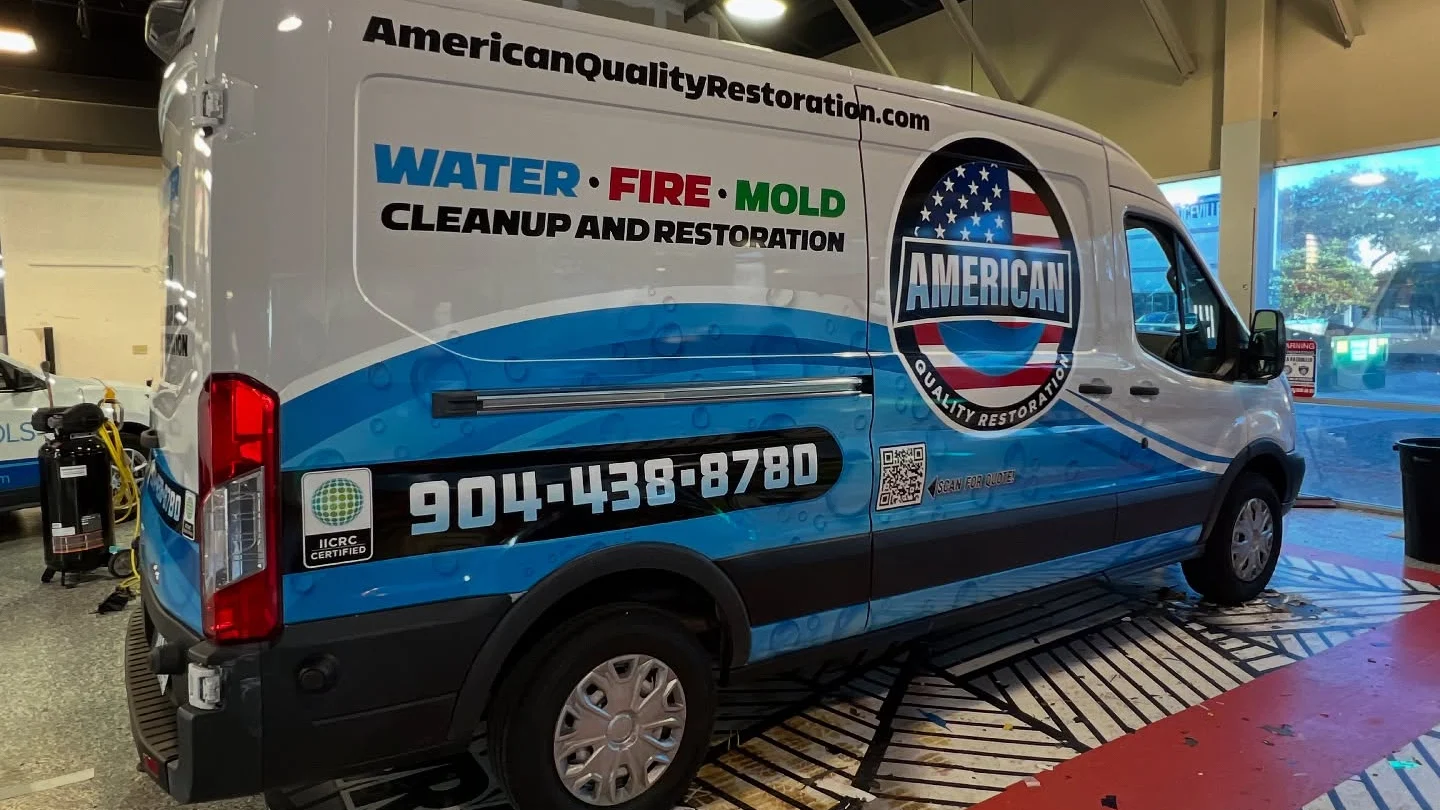
Mold Remediation in Jacksonville
Mold remediation in Jacksonville and surrounding areas. IICRC-certified technicians, insurance billing accepted. Call (904) 438-8780.
A musty smell that won’t air out, a dark ring spreading across a ceiling tile, or a spike in allergy symptoms that eases every time you leave the house: these are the signals that mold has moved past a surface problem and into the building materials themselves. In Jacksonville’s humidity, a slow roof leak or an unresolved plumbing drip can go from a damp spot to active colonization in as little as 24 to 48 hours. By the time it’s visible, there’s usually more growing behind the wall than what you can see.
What Mold Remediation actually involves
Mold remediation is not the same as wiping down a bathroom tile with bleach. It’s the physical removal of colonized material, controlled containment to keep spores from migrating to clean areas of the home, and verification that the air and surfaces are clear before the job is called finished. Depending on the extent of growth, a job can involve removing drywall, insulation, baseboards, or flooring that has absorbed moisture and can no longer be cleaned, not just covered up. Technicians use negative air machines, HEPA filtration, and antimicrobial treatments, and the work is done inside sealed plastic containment barriers so spores disturbed during removal don’t spread into HVAC systems or adjoining rooms. A typical residential job runs from a few days for a contained, single-room situation to over a week for a larger infestation tied to a chronic moisture source.
Our process
- Source identification. Mold doesn’t grow without a moisture source, so before any material comes out, we find and address the leak, condensation point, or ventilation issue feeding it. Removing mold without fixing the source just buys the homeowner a repeat visit.
- Containment setup. Plastic sheeting and negative air pressure isolate the work area so spores stay out of the rest of the home, following the containment practices outlined in the IICRC S520 mold remediation standard.
- Air sampling and scope confirmation. Before demolition begins, air and surface conditions are documented, which also gives the homeowner and their insurance adjuster a clear before-and-after record.
- Removal and HEPA filtration. Affected materials are removed and bagged inside containment, surfaces are HEPA-vacuumed and treated, and air scrubbers run continuously to capture airborne spores during the work.
- Clearance verification. Once remediation is complete, conditions are checked against the pre-work baseline to confirm the area meets the clearance criteria before containment comes down.
What separates a good Mold Remediation response from a bad one
The most common mistake in mold work isn’t the removal itself, it’s skipping containment or cutting it short to save time. Without proper negative air pressure, spores disturbed during demolition settle into carpets, ductwork, and furniture in rooms that were never contaminated to begin with, turning a one-room job into a whole-house problem. Another frequent issue is treating the mold without resolving the moisture source behind it, which means the growth returns within weeks. Insurance adjusters reviewing a mold claim typically want to see documented moisture readings, photos of the affected area before demolition, and a clear scope tying the mold back to a specific, sudden event like a pipe failure rather than long-term neglect, since that distinction often affects what the policy covers. A thorough contractor documents all of this as part of the job, not as an afterthought.
What does Mold Remediation cost?
Cost depends on the square footage affected, whether the growth is contained to a surface or has spread into wall cavities and subfloor, and whether the moisture source requires separate repair. These figures are typical industry ranges, not a quote: every loss is different, and American Quality Restoration provides a written scope before any work begins. Homeowners insurance typically covers mold remediation when the growth results from a sudden, covered event such as a burst pipe, but it generally excludes mold tied to long-term humidity or deferred maintenance, so documentation matters.
| Scenario | Typical range |
|---|---|
| Small bathroom or closet, surface mold | $500 - $1,500 |
| Single room, contained growth behind drywall | $1,500 - $4,000 |
| Moderate spread across multiple rooms | $4,000 - $8,000 |
| Crawlspace or attic mold remediation | $2,000 - $6,000 |
| Whole-house remediation tied to chronic moisture | $8,000 - $20,000+ |
Seasonal & regional considerations
Jacksonville’s long, humid stretch from late spring through early fall keeps indoor relative humidity elevated in homes without properly sized HVAC systems, which is often enough on its own to sustain mold growth even without a leak. Older homes near the coast and around the St. Johns River tributaries also tend to run higher ambient moisture in crawlspaces and attics, so remediation in those areas often includes addressing ventilation or vapor barriers, not just removing what’s already grown.
Service area
American Quality Restoration provides mold remediation throughout Jacksonville, Jacksonville Beach, Orange Park, Ponte Vedra Beach, Atlantic Beach, Neptune Beach, Fleming Island, and Fruit Cove.
If you’re smelling something musty or seeing discoloration that keeps coming back, request an air quality test and get a documented scope before deciding how much work the problem actually needs.
Frequently Asked Questions
Does homeowners insurance cover mold remediation?
What level of mold remediation requires S520-compliant containment?
Can I stay in my home during mold remediation?
Will removing the mold stop it from coming back?
How long does a typical mold remediation job take?
Looking for the best mold remediation company in Jacksonville?
American Quality Restoration provides licensed and insured mold remediation in Jacksonville, FL and the surrounding area, and has served local property owners since 2021. Customers rate us 5.0 out of 5 stars across 62 Google reviews. We answer calls 24/7 — call (904) 438-8780 for immediate help.
Need Mold Remediation now?
We respond 24/7 across Jacksonville and surrounding FL cities.
Related Coverage
- Our Restoration Services
- Contact American Quality Restoration
- Mold Remediation in Atlantic Beach
- Mold Remediation in Fleming Island
- Mold Remediation in Fruit Cove
- Mold Remediation in Jacksonville Beach
- Mold Remediation in Neptune Beach
- Mold Remediation in Orange Park
- Mold Remediation in Ponte Vedra Beach
- How To Choose a Restoration Company in Jacksonville (Without Getting Burned)
- How To Test for Mold in Your Home (DIY Kits vs a Pro Inspection)
- 7 Signs You Have Hidden Mold (and What To Do Next)