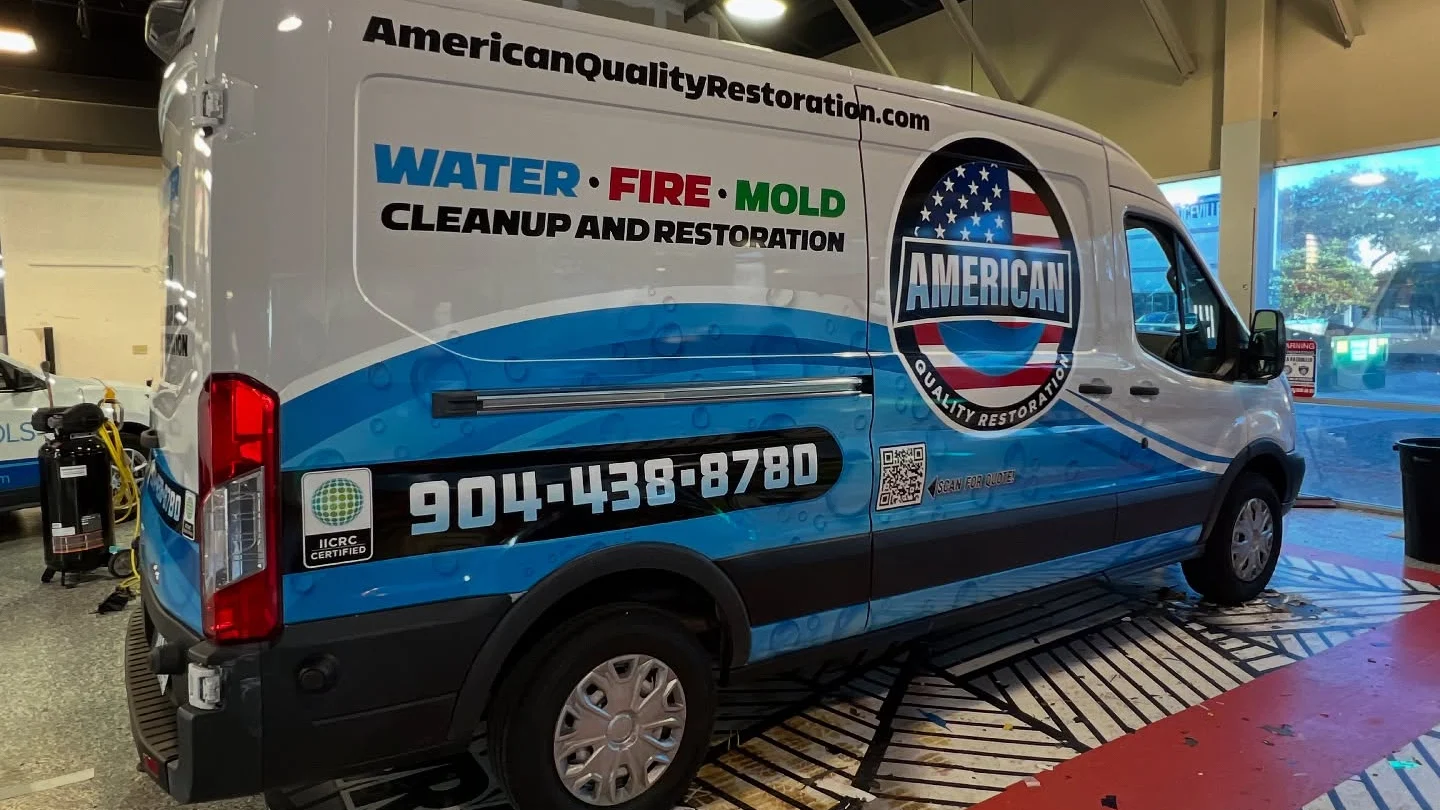
24/7 Emergency Fire Damage Restoration in Jacksonville
24/7 emergency fire damage restoration in Jacksonville and surrounding areas. IICRC-certified technicians, insurance billing accepted. Call (904) 438-8780.
Fire damage emergency in Jacksonville? We answer 24/7. Call (904) 438-8780 and we’ll walk you through what to do before a crew ever arrives.
A house fire does its worst damage long after the flames are out. Acidic soot keeps etching metal and glass for days, smoke odor works its way into drywall and subfloor, and the water used to fight the fire sits in wall cavities where it can’t be seen. Fire cleanup on its own rarely solves the problem. What’s needed is coordinated fire and smoke restoration that treats the structure, the air, and the contents as one job, started fast enough to stop secondary damage before it sets.
What Fire Damage Restoration actually involves
Structural fire damage isn’t limited to the room where the fire started. Heat warps framing members, smoke travels through HVAC ductwork into rooms that never saw flame, and the water from suppression efforts soaks into subfloors and wall cavities. A real fire damage restoration job addresses all three: the burned materials, the soot and smoke residue coating every surface in the home, and the moisture left behind. Technicians holding IICRC FSRT certification identify how far soot and odor have traveled, and where IICRC ASD structural drying protocols need to run alongside the cleanup. Depending on the extent of the fire, this work can take anywhere from a few days for a contained, single-room loss to several weeks when framing, drywall, and contents all need attention.
Our process
- Soot and damage characterization. Before any cleaning starts, we identify what type of soot is present (dry protein residue from a kitchen fire behaves very differently than the wet, smeary synthetic soot from burning plastics and furniture) and document the extent of heat, smoke, and water damage room by room for the insurance file.
- Structural stabilization and water removal. Any water used to extinguish the fire gets extracted and the affected materials are dried per IICRC standards, because fire damage left wet turns into a mold problem within days.
- Soot and residue removal. Surfaces are cleaned using methods matched to the soot type, from dry sponging to wet cleaning to abrasive methods on masonry and concrete, followed by thermal fogging to neutralize odor molecules that have penetrated porous materials.
- Air treatment. HEPA air scrubbing and, where odor has penetrated deep into framing or ductwork, ozone treatment is used to break down smoke odor at the molecular level rather than masking it.
- Contents pack-out and post-fire restoration. Salvageable belongings are inventoried, packed out, and cleaned off-site while the structure is repaired, then returned once the home is ready.
What separates a good fire damage restoration response from a bad one
The most common mistake is treating fire cleanup as a surface-level job: wiping down visible soot and running an air freshener without addressing what’s behind the walls. Soot is acidic and keeps corroding metal fixtures, appliance components, and wiring for as long as it sits untreated, so delays cost homeowners more than they realize. Another frequent miss is skipping moisture readings on framing and subfloor after suppression water is removed, which lets hidden dampness turn into a mold claim weeks later. Insurance adjusters pay close attention to documentation: moisture logs, soot-type notes, and room-by-room photos before and after cleaning. A thorough post-fire restoration scope accounts for odor penetration into HVAC systems, not just the rooms that show visible char.
What does Fire Damage Restoration cost?
Every fire loss is different, and American Quality Restoration provides a written scope of work before any repair or cleaning begins so there are no surprises. Homeowners insurance typically covers fire damage restoration under the dwelling and contents portions of a standard policy, though coverage details vary by carrier and policy. Below are typical industry ranges based on the scope of damage, not a quote.
| Scenario | Typical range |
|---|---|
| Small, contained kitchen fire | $2,000 - $8,000 |
| Single room with smoke damage, no structural burn | $3,000 - $10,000 |
| Multi-room fire with structural charring | $10,000 - $40,000 |
| Whole-house fire requiring structural rebuild | $40,000 - $150,000+ |
| Contents cleaning and pack-out (separate line item) | $1,500 - $6,000 |
Seasonal & regional considerations
Northeast Florida’s thunderstorm season, roughly June through September, brings frequent lightning activity, and lightning strikes are a recurring cause of residential fires in the area. The region’s heat and humidity also mean that any water used during fire suppression needs to be addressed quickly, since damp framing and drywall left behind by firefighting efforts can start supporting mold growth within a couple of days in Jacksonville’s climate.
Service area
American Quality Restoration responds to fire damage calls throughout Jacksonville, Jacksonville Beach, Orange Park, Ponte Vedra Beach, Atlantic Beach, Neptune Beach, Fleming Island, and Fruit Cove.
If your home has smoke or fire damage, don’t wait on soot to keep etching surfaces or odor to work deeper into the structure. Call (904) 438-8780 to begin smoke and soot removal and get a written scope started.
Frequently Asked Questions
Does homeowners insurance cover fire damage restoration?
What's the difference between protein soot and synthetic soot, and why does cleanup vary?
How soon does smoke and soot cleanup need to start to prevent permanent damage?
What does ozone treatment do, and is it safe to be in the house during treatment?
Do I need to move out of my home during fire damage restoration?
Looking for the best fire damage restoration company in Jacksonville?
American Quality Restoration provides licensed and insured fire damage restoration in Jacksonville, FL and the surrounding area, and has served local property owners since 2021. Customers rate us 5.0 out of 5 stars across 62 Google reviews. We answer calls 24/7 — call (904) 438-8780 for immediate help.
Need Fire Damage Restoration now?
We respond 24/7 across Jacksonville and surrounding FL cities.