What Happens After a House Fire
A fire doesn’t end when the flames go out. The real damage often spreads in the hours and days afterward: soot settles into porous surfaces, smoke odor works its way into drywall and insulation, and the water used to extinguish the fire starts soaking into subfloors and framing. In Jacksonville’s humid climate, that combination of moisture and soot residue can start etching metal fixtures and discoloring surfaces within a day or two. Understanding the restoration process, from the first walkthrough to the final odor check, helps you know what to expect and what questions to ask if you’re working with an insurance adjuster.
The Immediate Aftermath: What You’re Looking At
Even a small, contained fire, like one that starts in a kitchen and is put out before it spreads to other rooms, leaves damage well beyond the burn area. Expect to find:
- Soot film on walls, ceilings, and surfaces throughout the home, carried there by smoke even in rooms the fire never reached
- Water damage from firefighting efforts, pooling under flooring or soaking into drywall
- A persistent smoke smell that gets stronger as temperatures rise or the HVAC system cycles on
- Warped or discolored materials, especially plastics, laminate countertops, and vinyl flooring near the heat source
The type of fire changes what you’re dealing with. A grease fire leaves a thick, oily residue that smears if wiped with a dry cloth. A fire that involved synthetic materials, furniture foam, electronics, plastics, tends to leave a drier, powdery soot that travels further through the air and settles in HVAC ductwork.
Immediate Steps to Take
- Confirm the fire department has cleared the home for re-entry. Structural damage isn’t always visible, and a fire marshal’s clearance is the first checkpoint.
- Document everything before you touch anything. Photograph every room, every damaged item, and any visible structural issues. This record matters for your insurance claim.
- Call your insurance company and ask specifically what’s covered: structural repair, smoke damage, content cleaning, and temporary housing if the home isn’t livable.
- Secure the property. If windows are broken or there’s a hole in the roof or a wall from the fire or from firefighting access, the opening needs to be covered to keep out weather and prevent further damage or unauthorized entry.
- Turn off the HVAC system. If it was running during the fire, soot has likely been pulled into the ductwork and will recirculate through the house every time the system runs.
- Avoid handling items you plan to keep for insurance documentation until they’ve been photographed.
What Not to Do
- Don’t wipe down soot with a damp cloth. Water activates certain soot residues and can smear them permanently into fabric, drywall, and finished wood instead of lifting them off.
- Don’t run the HVAC system until it’s been inspected and cleaned. Running it spreads soot into rooms that weren’t directly affected.
- Don’t throw away damaged items before documenting them, even items that seem clearly ruined. Your adjuster may need to see them.
- Don’t assume a room is safe because it looks fine. Smoke damage is often invisible in the first day or two and becomes more apparent as residues continue to settle and react with surfaces.
- Don’t try to repaint or seal over smoke stains yourself. Paint applied over unsealed smoke residue almost always allows the odor and discoloration to bleed back through within weeks.
When to Call a Professional
A small, isolated fire, say, a pan fire that was out in under a minute with no visible spread, might be something a homeowner can clean up with standard household products. Anything beyond that, especially a fire that triggered the sprinkler system, required firefighting water, or produced visible smoke throughout multiple rooms, benefits from a professional assessment.
The reasons go beyond convenience. Soot is acidic and continues to degrade materials the longer it sits untreated. Smoke odor molecules bond to surfaces at a molecular level and typically require specialized cleaning agents, thermal fogging, or ozone treatment, not air fresheners or surface cleaning, to fully neutralize. And firefighting water introduces the same risk as any other water intrusion: materials that look dry on the surface can stay wet inside wall cavities, which sets up conditions for mold growth within 24 to 48 hours if it isn’t addressed.
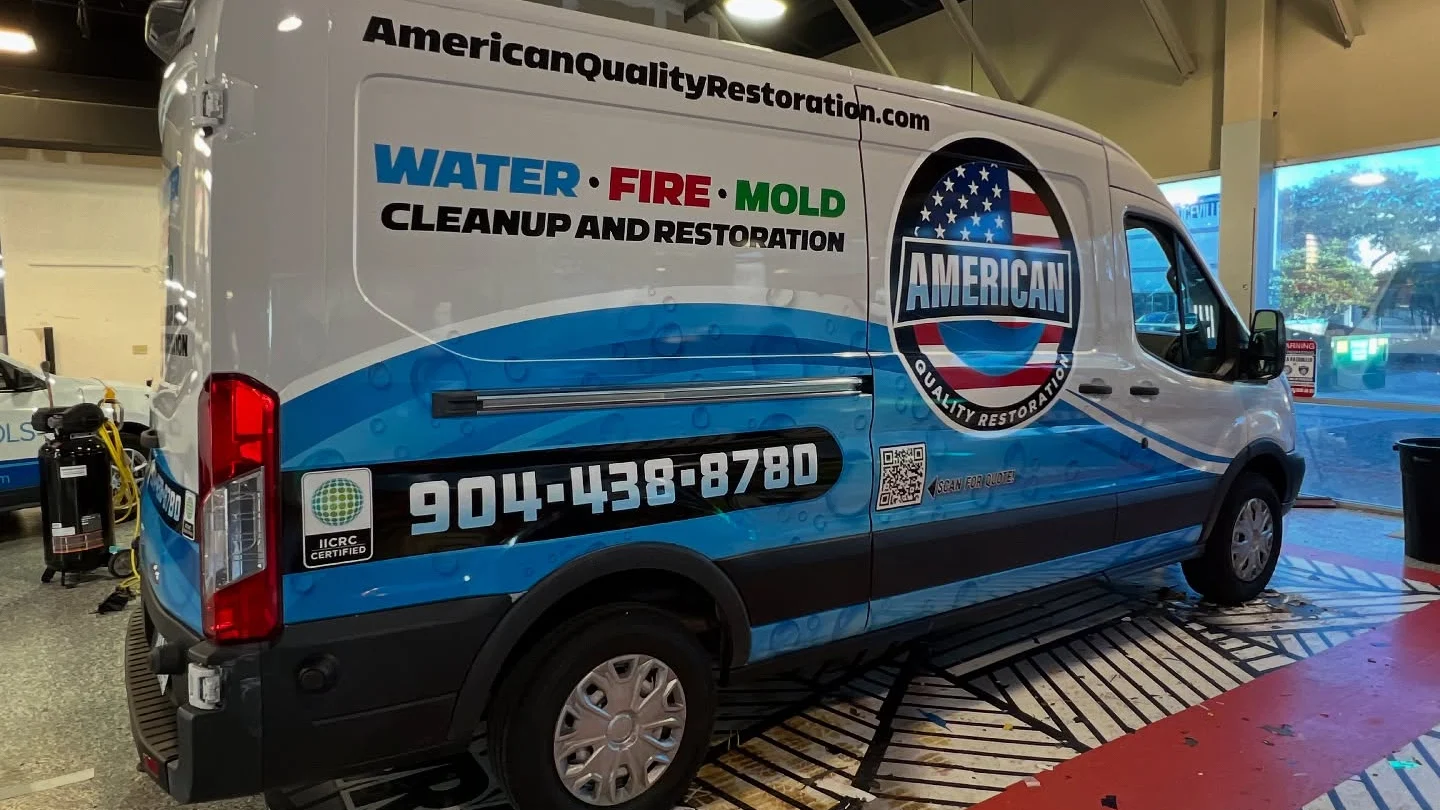
American Quality Restoration’s technicians hold IICRC Fire & Smoke Restoration (FSRT) certification and handle both the fire damage restoration and the smoke damage restoration separately, since each requires different equipment and techniques. If you’re in Jacksonville, Jacksonville Beach, Orange Park, Ponte Vedra Beach, Atlantic Beach, Neptune Beach, Fleming Island, or Fruit Cove, call (904) 438-8780 and a technician can walk you through what your specific situation needs.
The Restoration Process, Step by Step
Once a restoration company is on-site, the process generally follows this sequence:
- Assessment and documentation. A technician inspects every affected area, including rooms with no visible fire damage, to map out the full extent of smoke and soot spread. This documentation also supports the insurance claim.
- Board-up and securing the structure. Broken windows, damaged doors, or holes in the roof or walls get covered to protect the property from weather and unauthorized entry while work continues.
- Water extraction, if applicable. Any water from firefighting efforts is removed and affected materials are dried using the same structural drying principles applied to any water loss.
- Soot and debris removal. Loose soot and charred debris are removed from surfaces before any cleaning agents are applied, since scrubbing over loose soot grinds it deeper into the material.
- Content cleaning or pack-out. Furniture, textiles, and personal belongings that can be restored are cleaned off-site, which also gets them out of the house so the structural work can proceed without recontaminating cleaned items.
- Odor treatment. This step addresses the smoke smell at the source, in walls, insulation, and ductwork, rather than masking it.
- Structural repair. Damaged drywall, flooring, and framing are repaired or replaced once the space has been cleaned and verified dry.
The full timeline depends heavily on how much of the structure was affected and whether reconstruction is needed, but most homeowners can expect the cleaning and odor phases to take longer than people initially assume. Smoke odor in particular is one of the more stubborn problems in a fire recovery because it hides in places you can’t easily inspect, subflooring, wall cavities, HVAC ducts, and resurfaces weeks later if it isn’t fully treated the first time.
If you’re standing in a house that smells like smoke and you’re not sure what’s salvageable, a professional walkthrough costs you nothing but the time it takes, and it gives you a clear, documented starting point for your insurance claim and your next steps. Call (904) 438-8780 to schedule an assessment.