A burst pipe doesn’t wait for a convenient time. The moment you hear a hiss, a pop, or see water spreading across the floor, your first move is simple: shut off the main water supply, then kill the power to any outlets or fixtures in the affected area before you do anything else. Everything after that, drying out the space, assessing damage, calling for help, follows in a specific order. This checklist walks through each step so you’re not guessing while water keeps spreading.
What a Burst Pipe Actually Looks Like
Not every burst pipe announces itself with a dramatic spray. In Jacksonville homes, especially older ones in neighborhoods like Riverside or San Marco with original galvanized or copper plumbing, a pipe can split quietly behind a wall or under a slab. You might notice a warm spot on the floor, a faint trickle sound inside a wall cavity, or a ceiling stain that wasn’t there yesterday. Slab leaks are common here too, since so much of the area’s housing stock sits on concrete foundations, and water from a cracked under-slab pipe can travel sideways before it ever surfaces. Sudden winter cold snaps, rare as they are in Northeast Florida, can still freeze an exposed pipe in a crawlspace or garage long enough to crack it, with the real flooding showing up once temperatures rise and the ice inside melts.
Immediate Steps: What to Do First
- Shut off the main water valve. This is usually near the water meter or where the line enters the house. If you don’t know where it is, find it today, before you need it in a hurry.
- Cut power to the area if water is near outlets, switches, or appliances. If the breaker panel itself is wet or you have to stand in water to reach it, leave it alone and call an electrician instead.
- Contain what you can. Towels, buckets, and a wet/dry shop vac buy you time, but don’t risk standing water near anything electrical.
- Move furniture and belongings out of the path of water, starting with anything irreplaceable, electronics, and upholstered items that absorb water quickly.
- Photograph everything before you start cleanup. Document the source, the spread, and any damaged belongings for your insurance claim.
- Open cabinet doors and closet doors in the affected area so trapped moisture doesn’t sit against wood and cause swelling or hidden mold growth.
What Not to Do
- Don’t run a space heater or hair dryer directly on a wet wall or floor to “speed things up.” It can push moisture deeper into the material instead of out.
- Don’t ignore a musty smell because the surface looks dry. Water behind drywall or under flooring can stay saturated for days while the surface reads dry to the touch.
- Don’t wait to see if it “dries on its own” before calling your insurance company. Most policies require prompt notification, and delays can complicate a claim.
- Don’t cut into drywall or pull up flooring yourself unless you’re confident about what’s underneath. Wiring, old plumbing, and even asbestos-containing materials in older homes are reasons to let a professional make that call.
- Don’t assume a slow drip isn’t urgent. A pinhole leak in copper pipe can widen overnight, especially under water pressure.
When to Call a Professional
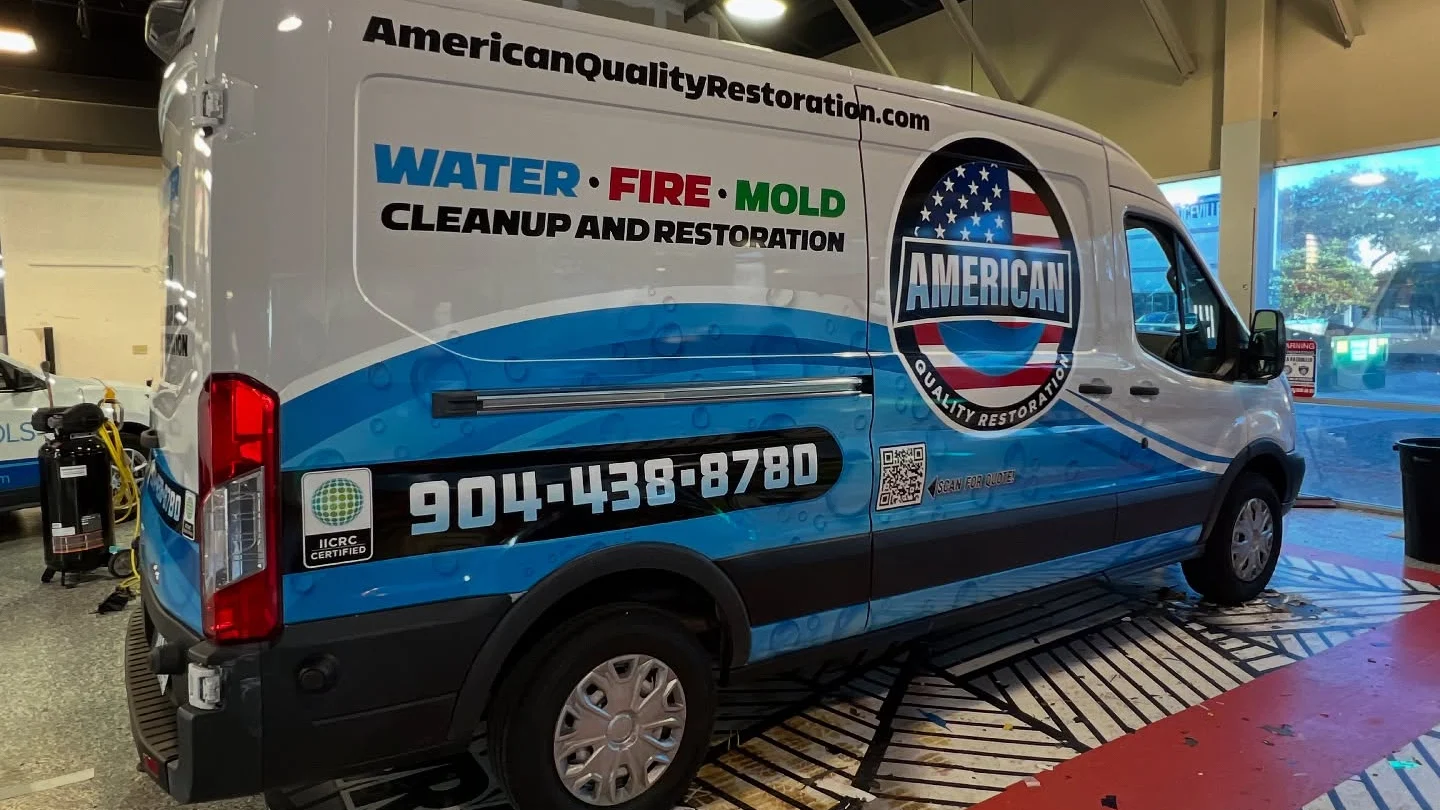
If the water has reached flooring, baseboards, or drywall, or if you’re not sure how far it traveled, that’s the point to call in a restoration crew rather than handle it alone. Our technicians hold IICRC water restoration certifications and use moisture meters and thermal imaging to find water that’s spread beyond what’s visible, behind cabinets, under subfloor, inside wall cavities. That matters because a pipe burst that looks like it affected one wall can actually be wicking moisture several feet in every direction.
This is also the moment to loop in a licensed plumber for the repair itself. American Quality Restoration handles both emergency plumbing repairs and the water cleanup and drying that follows, which means you’re not coordinating two separate companies while your living room is still wet. If the burst pipe was connected to a washing machine, dishwasher, or water heater rather than a wall or slab line, that’s worth mentioning when you call, since water heater leaks in particular tend to pool fast and travel under flooring before anyone notices.
The Recovery Process: What Comes After the Water Stops
Once the source is shut off and the standing water is extracted, the real work is drying the structure, not just the surface. A typical process looks like:
- Water extraction with pumps and wet vacuums to remove standing water quickly.
- Moisture mapping to identify exactly which materials, drywall, subfloor, insulation, framing, are still holding water.
- Structural drying using air movers and dehumidifiers, following IICRC S500 drying standards, with daily moisture checks until materials return to normal readings.
- Removal of unsalvageable materials, such as swollen baseboards or drywall that’s wicked water too high to dry in place.
- Repair and reconstruction, which can range from patching a section of drywall to replacing flooring, depending on how long the water sat before it was caught.
This stage typically takes several days, not hours, because rushing it risks trapping moisture that turns into a mold problem weeks later. If your policy covers water damage, most restoration companies, including ours, will document the loss and work directly with your adjuster so you’re not stuck submitting photos and invoices on your own.
A burst pipe is manageable if you move through the steps in order: shut off the water, protect yourself and your belongings, document the damage, and get a professional opinion on anything you can’t see. If you’re dealing with one right now in the Jacksonville area, American Quality Restoration can walk you through next steps and get drying equipment on-site, call (904) 438-8780.