Most standard homeowners policies cover water damage that’s sudden and accidental, like a burst pipe or a washing machine hose that lets go, but they exclude damage from flooding, and they exclude damage caused by neglect or a leak you let go on too long. That one distinction, sudden versus gradual, decides more claims than any other factor. If you’re staring at a wet ceiling or a soggy carpet right now, the short version is: document everything before you touch anything, call your insurer the same day, and don’t wait on repairs while you figure out coverage.
What a Standard Policy Actually Covers
Homeowners insurance (HO-3 policies, which most Jacksonville homeowners carry) typically covers water damage that is both sudden and accidental. Think: a supply line to the dishwasher splits overnight, a pipe freezes and cracks during a rare cold snap, a water heater tank fails and dumps forty gallons across the garage floor. In these cases, the policy usually pays to repair the source (sometimes with limits), dry out the structure, and replace damaged flooring, drywall, and belongings, minus your deductible.
What it almost never covers is flood damage, meaning water that enters from outside the home: storm surge, a overflowing creek, or rainwater that pools against the foundation and seeps in. That’s a separate policy entirely, through the National Flood Insurance Program or a private flood carrier. Given how much of Jacksonville sits near the St. Johns River and the Atlantic coastline, this is worth checking even if you’ve never filed a claim before. A lot of homeowners find out they don’t have flood coverage only after water has already come in.
Sudden Damage vs. Gradual Damage: Why It Matters
Insurers draw a hard line between a pipe that bursts without warning and a slow leak that’s been dripping behind a wall for months. The first is typically covered. The second is often denied as “wear and tear” or “lack of maintenance,” even if you genuinely had no idea the leak existed.
This is why the condition of the material matters at the time of inspection. A ceiling stain that’s brown and crusty with peeling paint tells a different story than a fresh, dark, spreading patch. Warped baseboards, a musty smell that’s been around for a while, or soft spongy drywall all suggest the damage built up over time, which is exactly what adjusters are trained to look for. If a leak has been active long enough to show signs of mold growth, which can start within 24 to 48 hours of sustained moisture, that timeline becomes part of the claim discussion too.
None of this means you should panic about getting denied. It means the sooner you catch and report a leak, the stronger your claim looks on paper.
What to Do in the First Few Hours
- Stop the source if you can. Shut off the main water valve or the fixture’s local shutoff if it’s safe to reach. Don’t delay documentation to do this, but don’t let water keep flowing while you take photos either.
- Photograph and video everything before you clean up. Wet carpet, water lines on walls, pooling on the floor, the source of the leak itself. Insurers want to see the damage as it happened, not after someone has already mopped and moved furniture.
- Call your insurance company the same day. Most carriers have a claims hotline that walks you through next steps and assigns a claim number. The earlier you report, the less room there is for a dispute about timing.
- Move what you can to protect belongings. Lift furniture legs onto blocks, pull rugs off wet flooring, move boxes off the ground. You’re not trying to fix the damage, just keep it from spreading to things that are still dry.
- Start a written log. Date, time, what you noticed, what you did. This becomes useful if the claim gets complicated later.
What Not to Do While You Wait
- Don’t start tearing out drywall or flooring before the adjuster has seen it (or before you’ve photographed it thoroughly), even if it looks obviously ruined. Premature demo is one of the most common reasons claims get delayed for “insufficient documentation.”
- Don’t assume a plumber’s repair receipt is enough proof of the damage itself. Keep the receipt, but it doesn’t replace photos of the affected materials.
- Don’t run a box fan on wet carpet for a week and call it handled. Materials can look dry on the surface while trapped moisture stays in the padding or subfloor, which is exactly the setup for mold later. Surface-dry isn’t the same as structurally dry.
- Don’t wait to file because you’re not sure the damage is “bad enough.” Minor-seeming water events can spread under flooring and behind baseboards in ways you won’t see until the smell shows up weeks later.
When It’s Time to Bring in a Professional
If the water came from inside a wall, under a slab, or behind a cabinet, the visible damage is rarely the whole story. Moisture meters and thermal imaging can show where water traveled that you’d never find by eye, which matters both for drying the home properly and for giving your insurer accurate documentation of the loss. A professional water damage restoration crew can also provide the kind of structured drying log and photo documentation that adjusters are used to reviewing, which tends to move claims along faster than homeowner-submitted photos alone.
This is especially true for burst pipe cleanup, where water often travels along floor joists or down a wall cavity far from the actual break, or for any leak that’s been active long enough that you’re unsure how long it’s really been going on. If you’re not sure whether what you’re looking at is a quick dry-out or a bigger structural issue, a same-day assessment answers that question faster than guessing.
The Recovery Process, Realistically
Once a claim is open and the source is stopped, recovery usually follows a pattern: extraction of standing water, placement of air movers and dehumidifiers, daily moisture monitoring until materials read dry per IICRC S500 drying standards, then repair or replacement of anything that didn’t survive, flooring, drywall, baseboards, sometimes cabinetry. Drying typically takes a few days, not hours, because the goal is getting moisture out of the structure itself, not just off the surface. Rushing this step is how homeowners end up with a second, mold-related problem a few weeks after the first one seemed resolved.
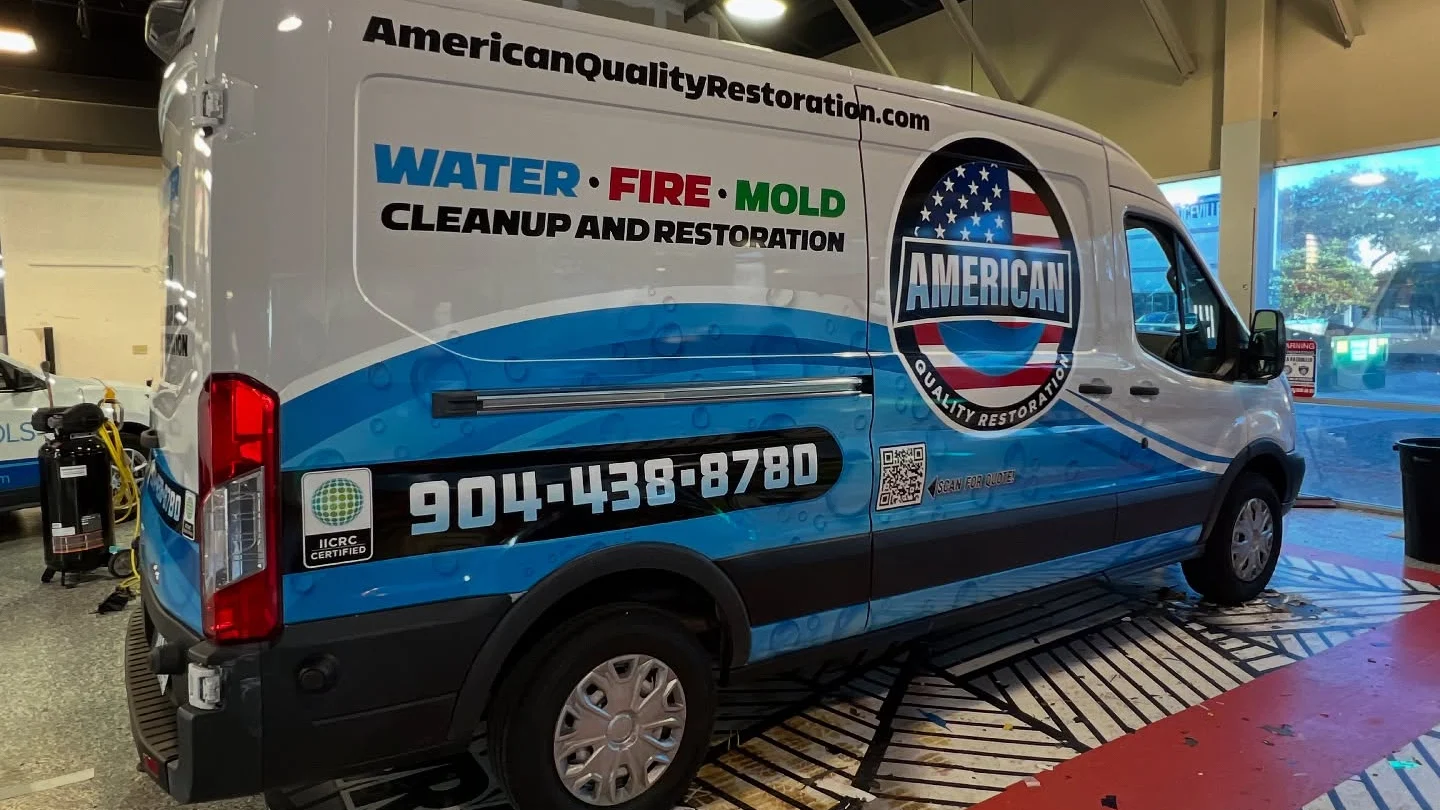
If you’re dealing with active water damage in Jacksonville, Jacksonville Beach, Orange Park, Ponte Vedra Beach, Atlantic Beach, Neptune Beach, Fleming Island, or Fruit Cove and you’re not sure whether it’s a simple fix or something that needs documentation for an insurance claim, American Quality Restoration can assess the situation and walk you through what the drying and repair process actually looks like. Call (904) 438-8780 to talk through what you’re seeing before you decide your next step.