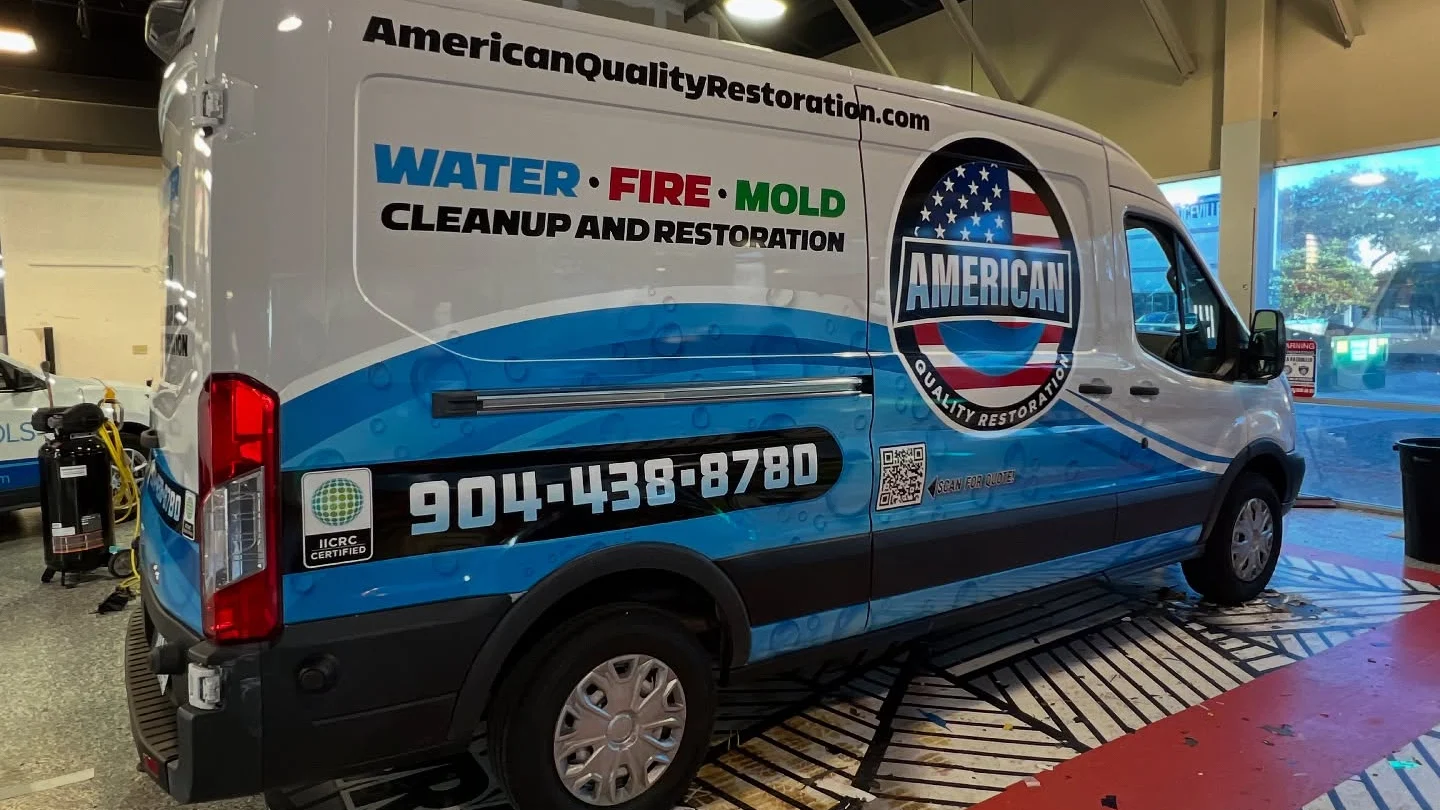
Industrial Restoration in Jacksonville
Industrial restoration in Jacksonville and surrounding areas. IICRC-certified technicians, insurance billing accepted. Call (904) 438-8780.
When a warehouse sprinkler head fails over a stocked rack, or a manufacturing line goes down after a roof leak finds its way into a control panel, the math is different than in a house. Square footage runs into the tens of thousands, concrete slabs and structural steel hold moisture in ways drywall never does, and every hour a production floor sits idle is a line item on someone’s P&L. Industrial restoration deals with that scale and that pressure, not a flooded bedroom.
What Industrial Restoration actually involves
Industrial restoration covers water, fire, and smoke damage inside warehouses, manufacturing plants, distribution centers, and processing facilities, where the building envelope, the racking systems, and the machinery itself all need separate evaluation. A residential air mover and a box fan won’t dry a 40,000 square foot concrete floor or pull moisture out of insulated metal wall panels. This work calls for commercial-capacity desiccant dehumidifiers, high-CFM axial fans, and moisture meters calibrated for concrete, structural steel, and built-up roofing, not just drywall and carpet pad.
Timelines depend heavily on what the facility produces and what’s stored on site. A dry-goods warehouse with a localized leak might be back in service in days. A plant with sensitive electronics, raw materials, or cold-chain product on the floor needs a slower, more deliberate process, because drying too fast or in the wrong sequence can warp steel decking or trap moisture under epoxy flooring where it causes problems months later.
Our process
- Facility and hazard assessment. Before any equipment goes in, we walk the affected area with facility staff to identify lockout-tagout points, confined spaces, chemical storage, and any part of the building that needs to stay isolated from the work zone.
- Containment and zone isolation. Plastic sheeting, negative air, and physical barriers separate the damaged area from active production or storage, so unaffected parts of the facility can keep operating while we work.
- Industrial-scale extraction and drying. Commercial extraction units pull standing water from floors and pits, then desiccant dehumidifiers and high-volume air movers go to work on concrete slabs, steel structure, insulation, and any affected inventory, with moisture readings logged daily per IICRC S500 drying standards.
- Equipment and surface protection. Exposed metal surfaces, electrical panels, and machinery get evaluated for corrosion risk, and we coordinate with facility engineers or electricians on anything that needs to be de-energized or inspected before it’s returned to service.
- Documentation and clearance. Moisture logs, photos, and drying progress reports go into a file built for your insurance carrier and your own facility records, so there’s a paper trail for the claim and for any downtime discussion with ownership or tenants.
What separates a good Industrial Restoration response from a bad one
The most common mistake is undersized equipment. A crew that shows up with residential-grade dehumidifiers for a facility this size will chase the moisture for weeks instead of days, and that delay shows up as lost production time. The second mistake is skipping the hidden spaces: metal building wall cavities, under-slab conduits, and the space behind racking all hold moisture that a quick walk-through misses, and mold or corrosion can start in those pockets well before anyone notices a smell.
Adjusters reviewing an industrial claim want to see moisture logs with dates and readings, not just a final “dry” sign-off, because business interruption coverage often hinges on documented drying timelines. They also look closely at whether machinery and electrical components were properly evaluated before being put back into service, since water damage to equipment is frequently a bigger cost than the structural repair itself.
What does Industrial Restoration cost?
Costs vary enormously depending on square footage, what’s stored or manufactured on site, and whether machinery or inventory was affected alongside the structure. The ranges below reflect typical industry figures for different scenarios, not a quote, and American Quality Restoration provides a written scope of work before any work begins so you know what’s included.
| Scenario | Typical range |
|---|---|
| Localized water intrusion, single bay or dock door | $3,000 - $8,000 |
| Warehouse-wide flooding, concrete slab drying | $15,000 - $50,000 |
| Smoke damage across a production floor | $10,000 - $35,000 |
| Fire damage with machinery and equipment affected | $50,000 - $200,000+ |
| Large loss, multiple buildings or production lines | $100,000 and up |
Most commercial property policies cover sudden water and fire losses to the structure and, depending on the policy, business interruption, but coverage for machinery and inventory often falls under separate endorsements worth reviewing with your carrier.
Seasonal & regional considerations
Jacksonville’s humidity and long hurricane season put metal and tilt-wall industrial buildings at particular risk for condensation damage and wind-driven water intrusion around roof penetrations and loading dock seals. Facilities near the river and port-adjacent industrial corridors also face higher groundwater and storm surge exposure, which matters for anything with below-grade storage or a slab-on-grade foundation close to flood-prone drainage.
Service area
American Quality Restoration handles industrial losses across Jacksonville and into Jacksonville Beach, Orange Park, Ponte Vedra Beach, Atlantic Beach, Neptune Beach, Fleming Island, and Fruit Cove.
If a leak, fire, or storm event has put part of your facility out of service, request an industrial restoration scope of work and we’ll walk the site with you before anything gets touched.
Frequently Asked Questions
Does insurance cover industrial restoration?
What size equipment do you bring for a warehouse or plant loss?
Can production continue in parts of the facility while you work?
How do you handle machinery and electrical panels after water exposure?
What documentation do you provide for a business interruption claim?
Looking for the best industrial restoration company in Jacksonville?
American Quality Restoration provides licensed and insured industrial restoration in Jacksonville, FL and the surrounding area, and has served local property owners since 2021. Customers rate us 5.0 out of 5 stars across 62 Google reviews. We answer calls 24/7 — call (904) 438-8780 for immediate help.
Need Industrial Restoration now?
We respond 24/7 across Jacksonville and surrounding FL cities.