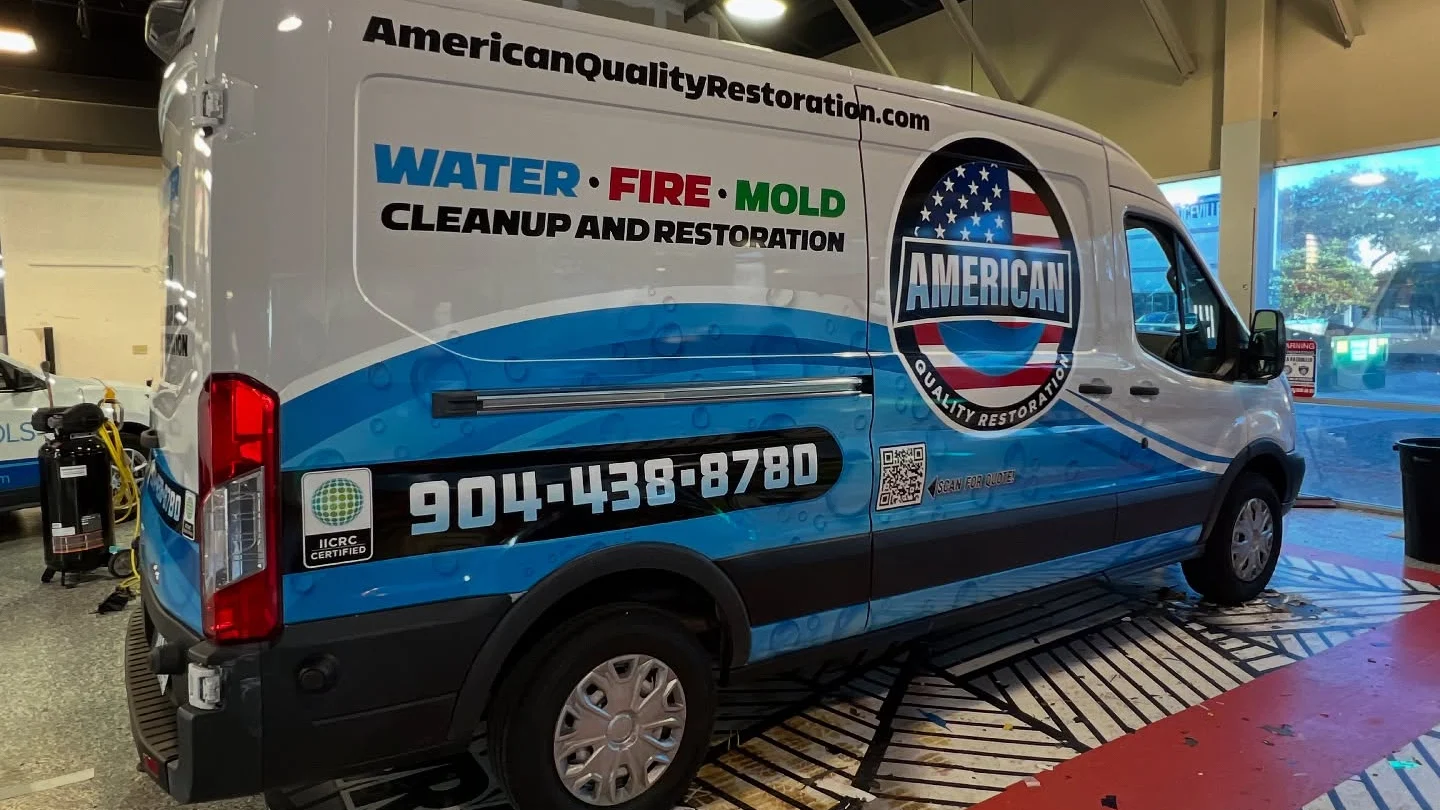
24/7 Emergency Flood Damage Restoration in Jacksonville
24/7 emergency flood damage restoration in Jacksonville and surrounding areas. IICRC-certified technicians, insurance billing accepted. Call (904) 438-8780.
Flood damage in Jacksonville? Call (904) 438-8780 now for emergency service. We answer 24/7 because floodwater does not wait for business hours, and neither do we.
Floodwater is different from a burst pipe or an overflowing water heater. It arrives from outside the structure, carrying silt, fertilizer runoff, road contaminants, and whatever the St. Johns River or a neighborhood drainage system has picked up along the way. That makes it Category 3 water in almost every case, which changes what can be saved, what has to come out, and how fast the clock matters once the water recedes.
What Flood Damage Restoration actually involves
Flood damage restoration starts with floodwater that has entered a home or business from an external source: storm surge, a swollen creek, street flooding that backs up through low entry points, or heavy rain that overwhelms yard drainage. Because this water is contaminated, the work goes further than extraction and drying. Porous materials that have been sitting in floodwater, drywall, baseboards, carpet pad, insulation, often cannot be dried in place safely and need to be removed and replaced rather than just dried out. Our technicians hold IICRC WRT and ASD certifications, which covers both the water removal and the structural drying side of a flood loss, and we document conditions with moisture meters and photos as we go so the file supports an insurance claim rather than working against it.
Timelines vary with how much water came in and how long it sat. A few inches in a garage that gets pumped out same-day is a different job than two feet of water that stood in a living room for 18 hours before anyone could get to it. Either way, the first 24 to 48 hours determine how much of the structure and contents are recoverable.
Our process
- Safety check and water categorization. Before anything else, we confirm the water is no longer rising, check for electrical hazards, and treat all floodwater as contaminated (Category 3) unless testing says otherwise.
- Contaminated water extraction. Truck-mounted and portable extraction units remove standing water. Submersible pumps handle deeper flooding in basements or crawlspaces.
- Removal of unsalvageable materials. Drywall, flooring, insulation, and other porous materials that absorbed contaminated water are removed to the appropriate height and disposed of per standard protocols. This step is where flood restoration differs most from a clean-water job.
- Antimicrobial application and structural drying. Remaining structural materials are treated and then dried using air movers and dehumidifiers, with daily moisture readings tracked until materials reach a dry standard.
- Final moisture verification. We don’t call a flood job finished on a schedule, we call it finished when the readings say the structure is dry, with documentation to back it up.
What separates a good flood response from a bad one
The most common mistake on flood losses is treating them like a clean-water event: drying materials that should have been removed. Drywall that stood in floodwater and gets dried instead of cut out can harbor contamination inside the wall cavity long after the surface looks fine. Another frequent miss is skipping documentation of the water line and affected materials before demolition starts, which creates problems later when an adjuster asks what was actually damaged and why it was removed.
A thorough response also checks what a rushed one skips: crawlspace vents and under-slab conditions, HVAC returns that may have pulled in contaminated air, and cabinetry toe-kicks where water wicks upward long after the visible flooding is gone. Adjusters reviewing a flood claim generally want to see moisture logs, photos of the water line, and a clear rationale for what was removed versus dried, which is exactly the kind of record we build into every job.
What does Flood Damage Restoration cost?
Costs depend heavily on how much water entered the structure, how long it sat, and how much demolition is required to remove contaminated materials safely. Every loss is different, which is why American Quality Restoration provides a written scope of work before any work begins. Homeowners insurance typically does not cover damage from external flooding unless a separate flood policy is in place, so it’s worth confirming your coverage type before assuming what’s included.
| Scenario | Typical range |
|---|---|
| Single room, shallow floodwater | $1,500 - $4,000 |
| Basement flooding, Category 3 water | $3,500 - $10,000 |
| Whole first floor affected | $8,000 - $20,000 |
| Crawlspace flood with insulation removal | $2,500 - $6,500 |
| Large-scale or multi-room flood event | $20,000 and up |
Seasonal & regional considerations
Jacksonville’s flood risk peaks during hurricane season and during prolonged heavy rain, when the St. Johns River and the area’s tidal creeks can back up faster than neighborhood drainage can handle. Older neighborhoods with slab-on-grade construction and low-lying lots near tidal waterways tend to see flooding first and worst. Humidity in the region also means any flooded structure that isn’t dried quickly is at greater risk for secondary damage, which is part of why fast extraction matters more here than in drier climates.
Service area
We respond to flood damage throughout Jacksonville, Jacksonville Beach, Orange Park, Ponte Vedra Beach, Atlantic Beach, Neptune Beach, Fleming Island, and Fruit Cove.
If floodwater has entered your home or business, schedule your flood damage assessment now. The sooner extraction and tear-out start, the more of the structure we can save.
Frequently Asked Questions
Does homeowners insurance cover flood damage restoration?
Why can't flooded drywall just be dried instead of removed?
How long does a typical flood cleanup take from extraction to dry structure?
What should I do with my belongings while waiting for flood restoration to start?
How do you determine what furniture and belongings can be saved after a flood?
Looking for the best flood damage restoration company in Jacksonville?
American Quality Restoration provides licensed and insured flood damage restoration in Jacksonville, FL and the surrounding area, and has served local property owners since 2021. Customers rate us 5.0 out of 5 stars across 62 Google reviews. We answer calls 24/7 — call (904) 438-8780 for immediate help.
Need Flood Damage Restoration now?
We respond 24/7 across Jacksonville and surrounding FL cities.