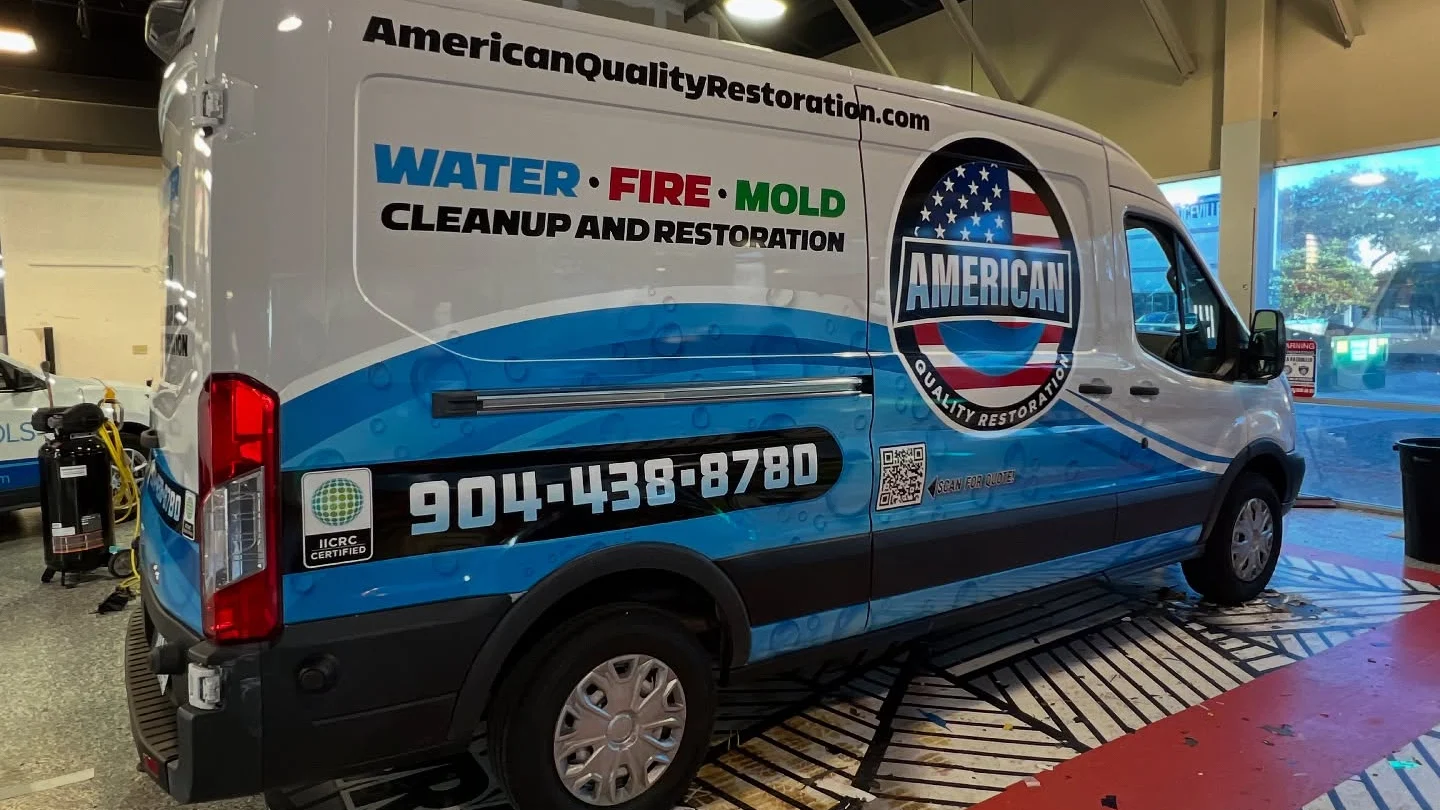
24/7 Emergency Ceiling Water Damage Repair in Jacksonville
24/7 emergency ceiling water damage repair in Jacksonville and surrounding areas. IICRC-certified technicians, insurance billing accepted. Call (904) 438-8780.
Water coming through the ceiling in Jacksonville? We answer 24/7. Call now and our crew heads out to stop the leak damage and start drying.
A brown ring spreading across a bedroom ceiling, a soft spot that gives slightly when you press it, or a steady drip landing in a bucket at 2 a.m. all point to the same thing: water has gotten above the ceiling plane and gravity is doing the rest. Ceiling water damage rarely stays cosmetic. Drywall loses most of its strength within a day or two of saturation, and a sagging ceiling can let go with little warning. American Quality Restoration’s technicians, trained to IICRC water and structural drying standards, find the source, dry the cavity, and stabilize the ceiling before a stain turns into a collapse.
What Ceiling Water Damage Repair actually involves
A leaking ceiling is almost never a ceiling problem by itself. It’s a roof flashing failure, a slow drain line, a cracked supply pipe in the floor above, or an AC condensate line that’s been dripping into insulation for weeks. The visible stain only tells you where the water chose to show itself, not where it’s actually pooled.
Technicians use moisture meters and thermal imaging to trace the wet path through the ceiling cavity, attic insulation, and framing before cutting anything open. Depending on how long the area has been wet and what’s hiding above the drywall, insulation often has to come out, and sections of plaster or drywall need to be removed to let air move through the cavity. Drying a ceiling isn’t the same as drying a floor: air has to be pushed upward into a confined, often insulated space, which usually means a different equipment setup than standing water elsewhere in the house.
Our process
- Source and moisture mapping. Before any drywall comes down, technicians trace the leak path using moisture meters and infrared imaging to confirm whether it’s roofing, plumbing, HVAC condensation, or a one-time event like an overflowing tub above.
- Controlled access and material removal. Saturated drywall, plaster, and insulation that won’t dry in place are removed in sections, not guessed at, to expose the framing and stop trapped moisture from feeding mold growth.
- Structural drying of the cavity. Air movers and dehumidifiers are positioned to dry the ceiling joists, subfloor above, and any remaining insulation, following IICRC S500 drying guidelines rather than a fixed number of days.
- Daily moisture monitoring. Readings are logged until framing and surrounding materials reach dry standard, not just until the ceiling looks dry to the eye.
- Repair coordination. Once materials test dry, American Quality Restoration’s reconstruction team can rebuild the ceiling, texture-match, and repaint so the repair blends into the room instead of standing out as a patch.
What separates a good ceiling water damage response from a bad one
The most common mistake is treating the stain as the whole problem: a handyman patches and paints over it without ever confirming the framing above is dry. Weeks later the stain bleeds through again, except now there’s mold growth sealed behind fresh paint. A thorough response pulls back insulation, checks the top plate and joists with a moisture meter, and documents readings before closing anything up.
Insurance adjusters look for exactly that documentation: moisture logs, photos of the source, and proof that drying followed a recognized standard rather than a guess. Jobs that skip this step tend to get disputed or underpaid, because there’s no evidence the cavity was actually dried before it was closed back up.
What does Ceiling Water Damage Repair cost?
Costs vary widely depending on ceiling size, material (drywall versus plaster), how far the water traveled, and whether insulation or framing needs replacing. These are typical industry ranges, not a quote; every loss is different, and American Quality Restoration provides a written scope of work before any repair begins. Homeowners insurance typically covers ceiling water damage when the cause is sudden and accidental, such as a burst pipe, but it usually excludes damage from long-term neglected leaks or deferred roof maintenance.
| Scenario | Typical range |
|---|---|
| Small stain, surface drywall repair only | $300 - $800 |
| Single room ceiling, drywall replacement and repaint | $800 - $2,500 |
| Sagging ceiling with insulation removal | $1,500 - $4,000 |
| Plaster ceiling repair (older homes) | $2,000 - $6,000 |
| Multi-room ceiling damage with framing exposure | $4,000 - $10,000+ |
Seasonal & regional considerations
Jacksonville’s humidity and long summer storm season put extra strain on ceilings year-round. Afternoon thunderstorms find roof flashing weaknesses fast, and attics here regularly hit temperatures that stress AC condensate lines, a common hidden source of ceiling leaks that has nothing to do with the roof at all. Homes with older plaster ceilings in historic neighborhoods dry more slowly than modern drywall and need a gentler, more closely monitored drying approach to avoid cracking.
Service area
American Quality Restoration repairs ceiling water damage throughout Jacksonville, Jacksonville Beach, Orange Park, Ponte Vedra Beach, Atlantic Beach, Neptune Beach, Fleming Island, and Fruit Cove.
If water is coming through your ceiling right now, don’t wait for the stain to spread. Call (904) 438-8780 to schedule a moisture assessment and find out what’s really happening above the drywall before it gives way.
Frequently Asked Questions
Does homeowners insurance cover ceiling water damage repair?
Why does my ceiling still look wet or stained after the leak was fixed?
How do you find the source of a ceiling leak if it's not directly under the bathroom or roof above?
Is a sagging ceiling safe to be under while waiting for repair?
Do you repair plaster ceilings differently than drywall ceilings?
Looking for the best ceiling water damage repair company in Jacksonville?
American Quality Restoration provides licensed and insured ceiling water damage repair in Jacksonville, FL and the surrounding area, and has served local property owners since 2021. Customers rate us 5.0 out of 5 stars across 62 Google reviews. We answer calls 24/7 — call (904) 438-8780 for immediate help.
Need Ceiling Water Damage Repair now?
We respond 24/7 across Jacksonville and surrounding FL cities.