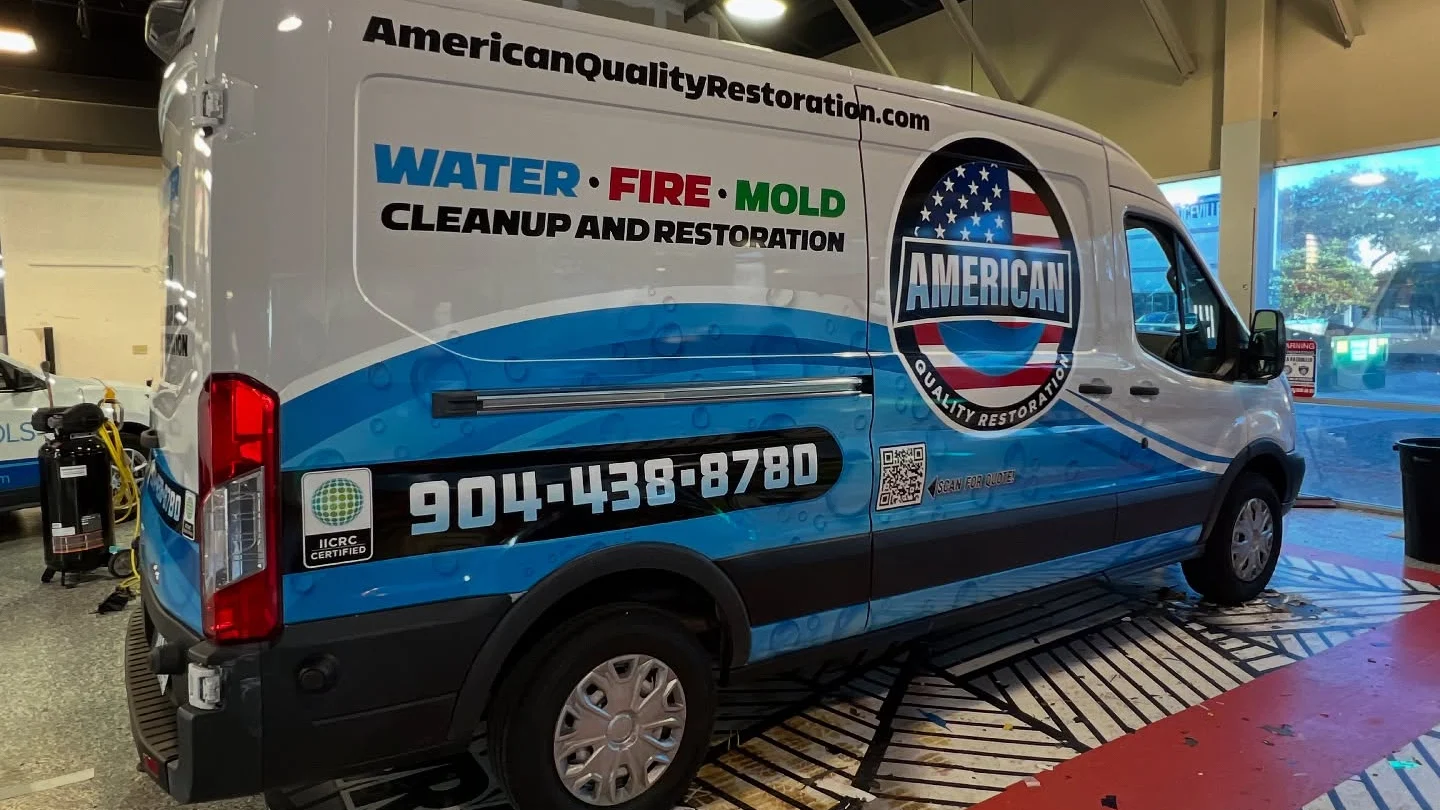
24/7 Emergency Basement Flooding Cleanup in Jacksonville
24/7 emergency basement flooding cleanup in Jacksonville and surrounding areas. IICRC-certified technicians, insurance billing accepted. Call (904) 438-8780.
Basement flooding in Jacksonville? Call now, we answer 24/7 and send a crew to start extraction and drying before standing water has a chance to wick further into framing, insulation, and stored belongings.
A flooded basement rarely starts with storm surge. More often it’s a sump pump that quietly failed overnight, groundwater pushing through a hairline foundation crack after a week of rain, or a slab that was never properly waterproofed in the first place. By the time a homeowner notices the smell or sees water under the stairs, the moisture has usually been sitting long enough to soak drywall, carpet pad, and anything cardboard stored against the wall. Basements hold moisture longer than any other part of the house because they’re below grade, poorly ventilated, and often finished with materials that were never meant to get wet.
What Basement Flooding Cleanup actually involves
Basement water removal starts with pumping out standing water, usually with truck-mounted or submersible pumps depending on depth, followed by extraction of residual moisture from carpet, pad, and any porous flooring. Because basements sit below grade, drying has to account for groundwater pressure still pushing moisture in through the slab and foundation walls even after visible water is gone. Our technicians, who carry IICRC water and structural drying certifications, set up air movers and commercial dehumidifiers sized to the square footage and ceiling height, then track moisture content in the concrete, framing, and any drywall daily until readings return to normal. Finished basements with stud walls, baseboards, and flooring built directly against a below-grade wall usually need more demolition than an unfinished space, since trapped moisture behind those materials has nowhere to evaporate.
Our process
- Source and entry-point assessment - we identify whether the water is coming from a failed sump, a foundation crack, window well backup, or plumbing, since the source changes how we scope the drying plan and whether it needs repair before drying can hold.
- Water extraction - pumps and extraction tools remove standing and trapped water from flooring, carpet, and low wall cavities.
- Selective demolition - wet drywall, baseboard, and non-salvageable flooring are removed to the height the water traveled, opening wall cavities so trapped moisture can actually dry instead of mildewing behind an intact surface.
- Structural drying and monitoring - dehumidifiers and air movers run on a schedule based on daily moisture readings in the slab, studs, and remaining drywall, not a fixed number of days.
- Clearance and reset - once moisture content in the structure matches dry industry benchmarks, we document final readings for the insurance file and the space is ready for rebuild.
What separates a good basement flooding response from a bad one
The most common mistake in basement water removal is drying the surface and stopping too soon. Concrete and masonry hold moisture far longer than wood framing above grade, and a basement slab can read dry to the touch while still releasing vapor for days. Crews that pull equipment based on a calendar instead of moisture readings leave conditions that invite secondary damage behind baseboards and inside wall cavities. Another frequent miss is ignoring the water’s path up the wall: if drywall was cut at a flat 2-foot line without checking how high the water actually wicked, moisture gets trapped above the cut line and the repair fails. Adjusters reviewing a basement claim typically want daily moisture logs, photos of the water line on framing and drywall before demolition, and documentation that the source of the water, not just the standing water, was addressed. Skipping that paperwork is the fastest way to get a claim delayed or underpaid.
What does Basement Flooding Cleanup cost?
Costs vary with how much of the basement flooded, whether it’s finished or unfinished, and how long the water sat before cleanup started. Every loss is different, which is why American Quality Restoration provides a written scope of work before any demolition or drying equipment goes in. Most homeowners insurance policies cover basement flooding when it stems from a sudden event like a burst pipe or sump pump failure, but they generally exclude flooding from external groundwater or surface water without a separate flood policy, so it’s worth confirming your specific coverage before work begins.
| Scenario | Typical range |
|---|---|
| Unfinished basement, standing water under 2 inches | $1,500 - $3,500 |
| Finished basement, carpet and baseboard removal | $3,000 - $7,000 |
| Finished basement with drywall demolition and full structural drying | $6,000 - $12,000 |
| Sump pump or plumbing source repair in addition to cleanup | $500 - $2,500 additional |
| Large basement, extended standing water, contents affected | $10,000+ |
Seasonal & regional considerations
Jacksonville’s water table sits high, and many homes with below-grade basements, less common here than up north but still present in older neighborhoods and some newer builds on higher lots, deal with hydrostatic pressure pushing groundwater through foundation walls during the region’s heavy summer rain season. A saturated yard after consecutive days of rain can keep pressure on a foundation wall long after the storm has passed, which is why a basement that dried out once can flood again within the same week if the source wasn’t addressed. Sump pump failures also spike during prolonged power outages from summer storms, so a battery backup is worth checking before the season ramps up.
Service area
American Quality Restoration handles basement flooding cleanup throughout Jacksonville, Jacksonville Beach, Orange Park, Ponte Vedra Beach, Atlantic Beach, Neptune Beach, Fleming Island, and Fruit Cove.
If your basement is taking on water right now, don’t wait for it to sit overnight. Call (904) 438-8780 to schedule your basement water extraction and start drying before the damage spreads further into framing and stored belongings.
Frequently Asked Questions
Does homeowners insurance cover basement flooding cleanup?
How do you know when a basement is actually dry, not just dry on the surface?
Why did my basement flood again after it seemed dry?
Do you remove drywall and flooring, or just dry them in place?
What should I do with a flooded basement while I'm waiting for a crew?
Looking for the best basement flooding cleanup company in Jacksonville?
American Quality Restoration provides licensed and insured basement flooding cleanup in Jacksonville, FL and the surrounding area, and has served local property owners since 2021. Customers rate us 5.0 out of 5 stars across 62 Google reviews. We answer calls 24/7 — call (904) 438-8780 for immediate help.
Need Basement Flooding Cleanup now?
We respond 24/7 across Jacksonville and surrounding FL cities.